
E-commerce Shoots
Saree Catalogue Models in Surat: The Pallu Test
GCN · 21 November 2026
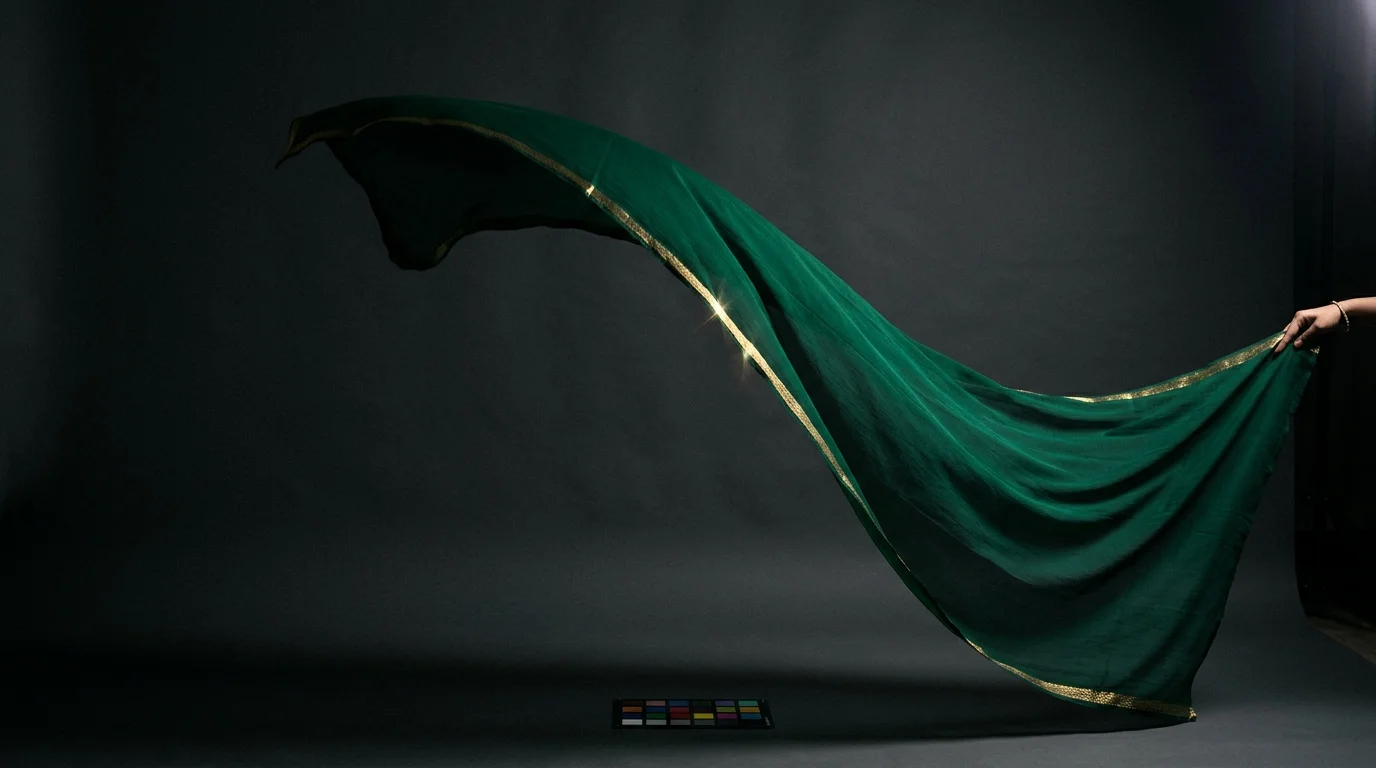
To cast a saree catalogue model in Surat, shortlist models by draping experience, measurements and a look that matches your buyer. Then ask each one for a short pallu video before you book. How the saree falls on camera tells you more than any portfolio.
In Surat, a saree is sold by its fall. Drape it on the wrong body, hold the pallu like a dupatta, and a party-wear georgette starts to look like a daily-wear print. The fabric did not change. The model did.
Surat's studios and photographers know catalogue work inside out. The casting deserves the same care.
How do you cast a saree catalogue model in Surat?
Five steps keep a catalogue shoot on track:
- Know your buyer. Who wears this saree, where, and for what occasion? A bridal buyer and a daily-wear buyer look for different faces.
- Shortlist on draping, not just looks. A model who has worn sarees on camera many times can save you a lot of time on the day.
- Ask for measurements and recent unedited photos. Catalogue photos have to match the real garment and the real fit.
- Run the pallu test. More on this below.
- Agree everything in writing before the shoot. The rate, the number of looks, and where the photos will be used.
What is the pallu test?
The pallu test is a simple check we suggest. It is not a fixed industry rule, just a quick way to see what a portfolio cannot show you.
Ask each shortlisted model for a phone video of under 30 seconds:
- Show the pleats and adjust them once.
- Throw the pallu over the shoulder in one smooth move.
- Turn slowly so the fall and the border are visible.
From that one video you learn how comfortable the model is with draping, how fabric moves on them, how colours read on their skin in normal light, and whether they can hold a pose without looking stiff.
What should a catalogue casting brief include?
A clear brief gets you the right shortlist the first time:
- Garment types and how many pieces.
- Where the photos will go: Amazon, Myntra, Flipkart, Meesho, a WhatsApp catalogue or print, and each platform's image specs.
- Your buyer: age group, region and occasion.
- Measurements and sizes you need. If your range goes into larger sizes, cast models who wear them. Our guide to casting plus-size models covers how.
- How many looks you plan per day.
- Studio or outdoor, and whether makeup and draping help is needed.
- Usage rights: where the photos can be used, and for how long.
When GCN casts a shoot, you get a shortlist with photos, measurements and past work, help with availability and shoot-day coordination, and rates agreed upfront in one number. See how we cast Gujarati models for catalogue shoots.
Sending a brief is free. Rates are agreed upfront in one number, usage rights are in writing, and if a model drops out, GCN finds a replacement.
Get a shortlist of Gujarati catalogue models with photos, measurements and past work.
Real model or AI model for your catalogue?
AI model tools now offer saree and kurti catalogues without a studio. They have a fair place. They can help with very large runs of everyday designs, matching backgrounds and quick colour variants. If you use them, check your marketplace's image rules first. India's amended IT Rules also require platforms to label AI-made content.
A real model matters most for:
- Hero images that set the tone for a collection.
- Festive and bridal edits, where buyers want to picture themselves.
- On-model video, where the saree moves.
- Any saree that sells on its drape and fall.
The debate is still open around the world. Some brands have faced public pushback over AI models, and models have raised concerns about their faces being copied. Written usage rights protect both sides: the model's face and the brand's photos.
We look at the same question for video ads in the real or AI question for ads.
What moves the cost of a catalogue shoot in Surat?
There is no single standard rate. Price changes with the concept, the city and the quality of the work. These are the things that move it most:
- The number of looks and garment changes.
- The model's experience.
- Studio or outdoor.
- Makeup, hair and draping help.
- Usage rights: marketplace only, or ads too, and for how long.
- Turnaround and retouching.
Put these in your brief. When you send it to GCN, the quote comes back as one clear number.
Sending a brief is free. Rates are agreed upfront in one number, usage rights are in writing, and if a model drops out, GCN finds a replacement.
For lookbooks and festive edits after the catalogue, see Surat fashion and textile creators.
Let the saree stay the hero. Send your casting brief.
How we put this guide together: we bring together public industry reports, platform and government rules, and what we see in our own work with Gujarati creators. Figures and rules change, so treat them as a starting point and check the latest before you decide.
Frequently asked questions
Do we need a Gujarati model if we sell across India?
If most of your buyers are in Gujarat or speak Gujarati, a familiar face helps the listing feel made for them. For pan-India ranges, cast for your main buyer.
How many looks can one model shoot in a day?
It depends on the garments, the changes, draping time and how many angles each listing needs. Plan it with your photographer and put the number in the brief, so everyone agrees before the day.
What if the model cancels on shoot day?
When GCN casts the shoot, we find a replacement if a model drops out.
Who can use the photos, and for how long?
Whatever the usage rights say. Agree in writing where the photos will appear, such as marketplaces, WhatsApp, print or ads, and for how long, before the shoot.
Ready to work with Gujarati creators?
Share your goal and we’ll match the right creator, then manage it end to end. We reply on WhatsApp.